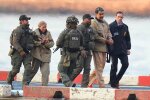
Despite Nicholas Maduro's capture by a U.S. special forces unit, Delcy Rodriguez, who was declared the interim head of Venezuela, called on Washington for reconciliation and cooperation. The acting president stated this in a Sunday video message on social media. Judging by the tone of the statement, Rodriguez has taken a softer stance toward the Donald Trump administration after previous declarations of the government's readiness to "defend the country" from the USA. "We invite the U.S. government to work together on a cooperation program aimed at joint development within the framework of international law and at strengthening lasting coexistence in the community," Rodriguez's statement says.
Thus, the process of power transition in Venezuela has begun. Although Caracas and Washington may have different ideas about its outcome, it can be stated that the regime will be adjusted and the U.S. will strengthen its positions in the country. No global player holds a "golden share" there; therefore, Trump himself will determine the contours of "cooperation."
PRESERVING THE LEGITIMACY OF THE REGIME: THE LEGAL BASIS
After Maduro's abduction late on the night of January 3, the Supreme Court of Venezuela issued a decree temporarily granting presidential powers to Vice President and Minister of Oil Delcy Rodriguez. As justification, the court cites the argument of the "forced nature of the president's absence," although under the Venezuelan constitution, the absence of the head of state can only be classified as temporary (e.g., due to travel) or definitive - in case of death, resignation, removal by a Supreme Court decision, physical or mental incapacity certified by a medical commission and approved by parliament, or abandonment of the post.
Depending on which of these options is eventually recognized - temporary or definitive - further steps will be determined.
- If Maduro's absence is recognized as definitive, elections must be held within 30 days, and until a new president is elected and takes office, the Vice President performs the duties of the head of state.
- If it is decided that the absence is temporary, the Vice President replaces the president for a term of up to 90 days, with the possibility of extending this period for another 90 days by a decision of parliament. If the temporary absence exceeds 90 days, the parliament decides by a majority vote of its members whether this should be considered a definitive absence.
It is likely that Maduro's absence will be recognized as temporary - this will give the transitional government and the Trump administration more time to determine the further scenario of events.
WHY NOT THE OPPOSITION? TRUMP'S ATTITUDE AND THE LOGIC OF ACTION
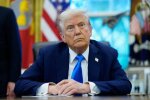
During a press conference following the operation in Venezuela, when asked by journalists why the U.S. is not handing over power to the opposition, specifically to Nobel Laureate Maria Corina Machado or the 2024 presidential candidate Edmundo Gonzalez Urrutia, who the opposition claims won the election against Maduro, Trump rejected such an alternative, stating: "It will be very difficult for her (Machado) to become a leader. She does not have support or respect in the country."
Some Western media explain Trump's attitude toward Machado by her decision to accept the Nobel Peace Prize, which the U.S. President openly sought to receive. Although Machado later stated that she dedicated the award to Trump, the very fact of accepting the prize was a "grave sin," which determined the U.S. President's attitude toward her.
However, there is also a perfectly rational explanation for Trump's actions. The U.S. President and Secretary of State Rubio did not favor the Venezuelan opposition from the beginning. They believed, not without reason, that it was ineffective (impotent) and a product of failed political engineering by American Democrats, which is partially true.
Trump 2.0 is haunted by the ghost of the disgraced "interim president" of Venezuela, Juan Guaido. Recall that it was Trump 1.0 who, on January 23, 2019, recognized Guaido as the "legitimate leader" of Venezuela. But instead of launching an uprising and taking power into their own hands, the local opposition quarreled among themselves, facts of Guaido's own corruption emerged, and the "interim president's" administration was easily discredited by Maduro. Trump did not want to repeat such an experience.
Perhaps that is why, a few weeks before Maduro's abduction, American intelligence services helped Machado secretly leave Venezuela, allegedly to appear in Norway for the Nobel Peace Prize ceremony, but in reality (as Timothy Snyder writes) to remove a rival for power. In other words, Machado was removed from the country deliberately, while the operation to kidnap Maduro was already being planned.
TRUMP'S "INSIDE DEAL" WITH POST-MADURO ELITES
Thus, from the very beginning, the U.S. entered into a conspiracy with part of the ruling regime. Firstly, this is indicated by the recognition of Delcy Rodriguez as the interim leader of Venezuela. Even if it is true that Rodriguez was not in the country at the time of the operation (it was written that she was in Moscow) and she could not be liquidated or kidnapped physically, Trump could have simply ignored her. But something entirely different happened. Rubio calls her and speaks about the transition of power.
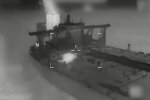
Secondly, during the operation to kidnap Maduro, not a single air defense shot was fired at the helicopters of the "Delta" unit. The entire system was either sabotaged or selectively destroyed in time. On the ground, there were "green corridors," free from accidental checkpoints and stray "colectivos" patrols around Maduro's residence itself. In fact, Maduro was surrendered by his own security forces. Surrendered in exchange for participation in the post-Maduro architecture of national governance.
Trump and his team do not want to bring democracy or engage in micro-management in Venezuela. They know very well what the local regime is and why any externally imposed leader would be ineffective without securing control on the ground. Therefore, control will be provided by former Chavistas.
The situation strongly resembles the history of the removal of the Trujillo regime in the Dominican Republic in the 1960s. After the dictator's assassination, the U.S. could have immediately removed Joaquin Balaguer, who was linked to Trujillismo, and imposed another president. But they did not do so. Joaquin Balaguer remained the formal head of the republic because he embodied the institutional continuity of the regime without Trujillo, allowing for reduced tension, the avoidance of civil war, and a guarantee that the state apparatus would not collapse. The leader of opposition sentiment at that time was not Balaguer, but Juan Bosch. However, Bosch came to power later, through elections in 1962, when the system had been minimally stabilized. Though this did not help him much, as by the second half of 1963, he was removed by the same Americans due to the threat of "leftism."
When a personalist regime collapses - whether through the capture of its leader, as happened with Nicolas Maduro, or through his physical removal, as happened with Rafael Leonidas Trujillo in 1961 - the question inevitably arises: why not immediately impose the most popular opposition leader? The answer lies not in moral or ideological factors, but in geopolitics and risk control.
In Venezuela, the United States had the material capability to neutralize Delcy Rodriguez or refuse to recognize any continuity of Chavismo and force a direct transfer of power to the opposition. However, they did not do this. On the contrary, they tolerated (at least temporarily) the fact that Delcy Rodriguez, an organic figure of the regime, found herself at the head of the state apparatus. This does not mean political support, but is a classic strategic decision: to preserve administrative continuity, control over the armed forces, the chain of command, and minimal stability while a transition period is developed.
ANATOMY OF THE POST-MADURO REGIME AND INFLUENCE GROUPS
I have repeatedly provided analyses of the regime (here, here, here) that formed in Venezuela under Nicolas Maduro. It was a symbiotic regime of security forces and a drug cartel that permeated all structures of governance and the roots of society itself. The regime could only be changed by bribing part of the elite and removing the security forces, preventing real military resistance. The opposition is not capable of this. Therefore, the U.S. made a deal with part of the regime's representatives. This does not mean that this faction has mastered the situation in the country today and will guarantee Trump the transition he wants in Venezuela. However, it is enough for increased negotiability from Caracas.
Let's attempt to characterize the main influence groups in Venezuela:
1. The Delcy Rodriguez Group (Civil Administration). Delcy Rodriguez herself is a landmark person for Venezuelan politics. Her father was the founder of the Maoist Socialist League of Venezuela, Jorge Antonio Rodriguez, who was kidnapped and killed by DISIP intelligence agents in 1976. Importantly, the Socialist League later became part of the Chavista ruling United Socialist Party (PSUV). Delcy's father became part of the political mythology of the Chavista regime, an image of a "forerunner" of Venezuelan socialism, a victim of the arbitrariness and repression of Yankee puppets.
Delcy Rodriguez held the positions of Vice President and Minister of Oil. The Economist describes her as economically literate compared to most members of the regime. Educated in France, she helped implement market reforms and the informal dollarization of the economy in 2019, which brought some stability to Venezuela.
Her biological brother, Jorge Jesus Rodriguez Gomez, heads the country's parliament - the National Assembly of Venezuela. Although his speakership has questionable legitimacy, it is contested by Dinorah Figuera, who was chosen by the opposition in 2023 as the successor to Juan Guaido and who is in Spain in political exile.
Jorge Rodriguez is quite a controversial figure. He managed to serve as Vice President of Venezuela, Minister of Information and Propaganda, and for nearly a decade as the mayor of Caracas. The Spanish El Pais even called him the likely successor to Maduro himself, had the latter refused to run for another term. Most likely, this is true, as other power centers could not, for various reasons, claim the top post.
Around the Rodriguez duo and their relatives (it's a whole clan), a new economic elite has formed, which grew wealthy on import-export operations and the gray zone of sanctioned foreign trade. Among their business partners are the Abu Nassif brothers, who own a network of construction companies, real estate, and control food imports, etc. Another figure is Majed Khalil Majzoub, a beneficiary of contracts for the import of electricity and food. One should not be surprised by the surnames, as it was the Lebanese who were almost monopolists under Maduro in the sphere of foreign economic activity.
Also united around Rodriguez are representatives of the regime's civil administration (some governors, middle-level officials, party leaders, pro-government dependent businesses) who are trying to preserve themselves and avoid lustration and criminal prosecution in the event of an opposition victory. But it is this group that is the most negotiable and can easily convert its administrative-party power into money and assets.
2. The Military (or the Vladimir Padrino Lopez Group). Padrino is the Minister of Defense of Venezuela. He controls the country's armed forces. The Commander of the Strategic Operational Command of the Bolivarian National Armed Forces (CEOFANB) is General Domingo Hernandez Larez.
Overall, the army maintains relative loyalty to the regime. In their time, Hugo Chavez and Nicolas Maduro put a lot of effort into ensuring the army protected the regime. Most senior army officers are under personal U.S. sanctions. They have everything to lose. Their security and well-being depend directly on the regime.
The main backbone of the officer and sergeant corps of the Bolivarian National Armed Forces (Fuerza Armada Nacional Bolivariana - F.A.N.B) and the Bolivarian National Militia (Milicia Nacional Bolivariana) underwent ideological training at the Bolivarian Military University of Venezuela (UMBV). At the head of this institution is the well-known ideologue of Chavista socialism, General Felix Guzman (Felix Ramon Osorio Guzman). In essence, it is a military-political school where cadets are ideologically processed in the spirit of loyalty to the Bolivarian revolution and Chavez's legacy. According to insiders, over the past decade, UMBV has trained about 2/3 of the commanding staff of Venezuela's security agencies.
It is also worth noting the significant role of Cuban military specialists who exercise operational command over combat-ready units of the Venezuelan armed forces. The opposition calls the Venezuelan Minister of Defense Padrino nothing less than a "brigadier general of the Cuban occupation forces."
The military declares loyalty to the regime and readiness to fight for the ideals of the Bolivarian revolution, but their behavior during Maduro's abduction suggests otherwise. The declaration of mobilization and deployment of troops serves as a more ritualistic cover and a bargaining position than a readiness to repel a second wave of Trump's special operation, should it come to that.
3. The "los Soles" Cartel (Spanish: Cartel de los Soles) / Diosdado Cabello Group. Actually, the exact translation is the "Cartel of the Suns" (in plural), because a sun is depicted on the insignia of senior officers in the Venezuelan army. This is a criminal network that appeared in the early 1990s within the Bolivarian National Armed Forces of Venezuela, consisting of high-ranking military and political figures involved in international drug trafficking, fuel smuggling, control over illegal mining activities in Venezuela, and the smuggling of gold, precious stones, and other minerals. In Venezuela, they simply say that "it is the business of the Sun/suns."
In March 2020, the U.S. Department of Justice released an official statement naming Nicolas Maduro and Diosdado Cabello as leaders of the "Cartel of the Suns," offering a reward of up to 50 million dollars (the largest in the history of the narcotics reward program) for information leading to their arrest (I wonder who earned that money?). The governments of Argentina, Ecuador, the USA, Paraguay, Peru, and the Dominican Republic recognized the "Cartel of the Suns" as a terrorist organization.
Despite denials and skepticism from some experts, the cartel truly exists and functions as a criminal group with an ecosystem of street gangs ("colectivos"), its own people in security structures, armed forces, courts, politics, and a network of front companies. Despite the fact that "los Soles" is a symbiont of the administration, the army, and the security block, permeating them at a cellular level, it still does not control everything. Clusters remain where other influence groups dominate.
Journalist Hector Landaeta, who researched the cartel, writes that this phenomenon began when drug traffickers started bringing cocaine into Venezuela using corrupt military units located in the border zone with Colombia. FARC-EP rebels used Venezuelan territory as a springboard to send drugs to Europe and the USA and eventually became part of "los Soles." Later, Chavez and Maduro put drug trafficking on a grand scale and involved state organizations and security forces in its escort. This became part of the profits for a parallel budget shared among cartel members from generals to privates. It is estimated that over 200 tons of cocaine pass through Venezuela annually, accounting for about 40% of global consumption.
Among the cartel's leaders, American intelligence services name Diosdado Cabello. He is a comrade-in-arms of Hugo Chavez from the first failed coup attempt and handled all the "dirty work" for both Chavez and Maduro.
Until 2020, Cabello shared power in the cartel with Cliver Alcala Cordones, who was later detained by U.S. anti-drug services. Some said Alcala was more influential than Maduro and Cabello combined. This was the result of merging his drug trafficking segment with the Guajira cartel. He married Marta Gonzalez, the niece of Hermagoras Gonzalez, the leader of the La Guajira cartel. Maduro and Diosdado eradicated Alcala because he became a threat to their power and the dominance of the cartel as a whole. In 2020, Alcala contacted the opposition, attempted a mutiny, supported Guaido, lost, and surrendered to the Americans. In fact, this mitigated his punishment in the U.S.
Since 2020, Diosdado Cabello has been the sole leader of the "los Soles" cartel. Today he is officially the Minister of Interior, Justice, and Peace, and the General Secretary of the United Socialist Party of Venezuela (PSUV). Under Cabello's official control are the Bolivarian National Guard (GNB), the Scientific, Criminal, and Criminological Investigation Corps (CICPC), and the Bolivarian National Intelligence Service (SEBIN). These forces have been accused of committing numerous human rights violations, including extrajudicial executions, enforced disappearances, torture, arbitrary detentions, and corruption. Cabello is called the "shadow president" of Venezuela, who nominally controls the cartel, internal security, the militia, and the "colectivos." In 2017, he was also accused of plotting to assassinate Senator Rubio, who was then pushing for new sanctions against Maduro and radical actions regarding the cartel.
It is believed that the group oriented toward Cabello will suffer the most from the regime change in Venezuela. The cartel must either be legalized in one way or another, or it will be torn apart by the parties to the deal with Trump. There is no place for Diosdado in the new architecture of power. By and large, the cartel is the main problem for Trump. Although the latter is trying to dump this problem on Rodriguez and Co. "Solve it within the family, with your own hands. A massacre is welcome."
- Third Party. The Opposition and Competitive Cartels (Tren de Aragua). The opposition can only count on holding partially democratic elections after a certain period of time, where Machado (or another consensus candidate) could win. Ultimately, after one or two electoral cycles, the opposition will get rid of the Maduro legacy and be able to substantially clean up the state. But not this time.
My sources claim that Delcy Rodriguez has already begun a dialogue with the opposition about forming a cabinet of national unity and dropping criminal prosecutions. As a reciprocal gesture of goodwill, she demands that the opposition abandon post-Guaido constructions (parallel institutions of power whose legitimacy the opposition emphasizes).
There is another force on whose behavior the future somewhat depends - the purely gangster cartel "Tren de Aragua" (TdA), led by Hector Rusthenford Guerrero Flores, known by the pseudonym "Nino Guerrero." It is believed to have over 5,000 members. They operate not only in Venezuela but also in the USA, Chile, Peru, and Colombia. For a long time, this cartel controlled the Tocoron prison, which served as its headquarters. The cartel has a network of street fighters who have repeatedly participated in clashes sometimes on the side of the opposition, and sometimes fighting against the opposition alongside the "colectivos." "Tren de Aragua" is capable of unleashing street terror in Caracas and making the average resident begin to recall the order under Maduro with nostalgia. Currently, they are not heard from, but they should not be forgotten, as the withdrawal of "los Soles" from the streets will create opportunities for "Tren de Aragua" and others.
EXTERNAL PLAYERS
- Russia. Losses and Helplessness. According to Reuters estimates, since 2006, Russia has provided Venezuela with loans totaling $17 billion (including $6 billion in the form of advances paid by Rosneft for Venezuelan oil supplies). At one time, Rosneft signed a $20 billion contract with the leadership of the Venezuelan monopolist PDVSA for joint extraction of raw materials. In 2017, Maduro agreed with Putin on Russian investments of over $5 billion in joint oil projects and $1 billion in the mining industry. As of the end of March 2019, the Venezuelan state oil company PDVSA owed Rosneft $2.3 billion in prepayments for oil supplies. Another approximately $3 billion falls on the Russian state loan granted to Venezuela. Until today, Moscow had control over 13% of all Venezuelan energy business. Caracas is the largest buyer of Russian weapons in Latin America. And now Russia will lose all of this. The Russians will have to accept defeat in Venezuela, and their assets will be mostly privatized by the USA and the PRC.
Putin has nothing to play and nothing to counter the U.S. with in Venezuela. Hang Russian flags on tankers carrying sanctioned Venezuelan oil? On which vessel would this "flag protection" collide with an American destroyer? Even Baltic countries are already stopping Russian ships.
According to Ukrainian HUR (Intelligence), there is a Russian contingent in Venezuela numbering over 120 military personnel. They are led by Colonel-General Oleg Makarevich - commander of the so-called "Equator" operational group of the Ministry of Defense of the RF. They perform the role of military advisors and instructors. This includes training infantry, special units, UAV operators, as well as working with intelligence and communications. They were also responsible for air defense and were supposed to be on duty on the day of Maduro's abduction, but not a single air defense shot occurred. And this is not a "deal" between Putin and Trump. The Russians did not have the opportunity to shoot; they were simply sabotaged by the locals. Their notorious GRU slept through the American special operation and did not even warn Maduro or their Cuban friends. The Chinese warned them and, according to some information, offered an option for honorable exile, but Maduro did not believe it. Now he is appearing in a New York court.
- China. Retreat and Compensation. For Caracas, Beijing is the second importer after India and the main exporter after the USA. Venezuela maintains a positive trade balance with China, with exports exceeding imports threefold. But for China, Venezuela is not a key trade partner in the region. Venezuela's share in the PRC's trade turnover with Latin America is only 2%. In 2016, a "black cat" ran between Caracas and Beijing. Maduro simply cheated his patron, starting to flirt with Delhi, Moscow, and Washington. Enterprises and infrastructure projects in which the Chinese had invested "hung," and the corrupt bureaucracy ate all the money. Beijing began to send bills, and Venezuela refused to pay. Since 2016, China stopped lending to Venezuela. Xi put Maduro "on pause." Only in May 2023 did Beijing resume high-level dialogue.
The China National Petroleum Corp. increased production at its joint venture with Venezuela, Sinovensa, in early April 2023, nearly doubling it to 90,000 barrels per day. Production is still about 40% below the historical level of 160,000 barrels per day in 2015.
However, over the last six months, Beijing has not hurried to invest money in Venezuela, understanding the risks of an American invasion.
Last year, Venezuelan oil accounted for about 4% of PRC imports, but its heavy, high-sulfur crude is critical for the production of bitumen used in construction and road infrastructure. That is why it is in demand among independent Chinese refineries - the so-called "teapots," primarily due to significant discounts.
Despite Venezuela possessing the world's largest proven oil reserves, it currently provides less than 1% of global supply. Although Sinopec and China National Petroleum Corporation have historical claims to develop Venezuelan fields, Morgan Stanley estimates that Trump's announcement about rebuilding the oil sector with American companies calls the future role of Chinese firms into question. But China will still get its share of oil in Venezuela, unlike Russia and Iran.
To protect its positions, China has already activated its clients in Venezuela's political class. My sources say that the Chinese are promptly trying to form something like a pro-Chinese party that will bargain with Trump for its preservation in power. Under Chinese guarantees, of course.
- Cubans and Neighbors. Who's next? Cuba acknowledged that its military defended Maduro and died during the American attack (because he did not trust his own security forces), and President Miguel Diaz-Canel Bermudez stated that the Cuban army is ready to fight for Venezuela. Havana was not only an accomplice but perhaps the main beneficiary of the Chavista Maduro regime. Cubans sent teachers and doctors for Chavez's ambitious social plans, later cleaned the army and security block of those disloyal to the regime, and served as Maduro's commissars and counterintelligence. In exchange, Cuba received cheap / free oil. Amid a total energy deficit - this became the basis for the survival of the Cuban economy.
Of course, the Cubans could send several tens of thousands of volunteers to Venezuela, but Havana is not sure that they themselves will not become the next target of American intervention. Cuba is a symbol of the historical defeat of the USA in the Caribbean basin. Trump would not refuse a rematch. The only question is that Cuba lacks oil and rare earth metals. Tens of thousands of migrants are no longer sailing from there, and there are no excessive threats. And when Diaz-Canel is squeezed, he shows wonders of negotiability with Washington.
Venezuela's neighbors on the continent, despite their leftist governments, are not themselves thrilled with the Maduro regime. 8 million migrants have settled precisely in Mexico, Chile, Colombia, and Brazil. None of these countries wants a new wave. The governments of these countries reacted with outrage to the American attack and condemned the violation of sovereignty. Но none of them is likely to support any resistance against the USA. Instead, they would rather "watch their own ass," as Trump recommended to Colombian President Gustavo Petro.
CONCLUSIONS
1. The basis of the power transition lies in a pragmatic deal, not democratic legitimacy. The post-Maduro transition in Venezuela was initiated not for the sake of establishing democracy or transferring power to the opposition, but as a result of a strategic agreement between the U.S. administration and part of the former ruling elite. The use of Delcy Rodriguez as an interim leader, the legal hair-splitting of the Supreme Court, and the removal of the popular opposition leader Maria Corina Machado indicate that Washington's top priority is controlled stability. The U.S. chose a classic strategy of preserving administrative continuity through former Chavistas, allowing them to avoid chaos and ensure predictability, even at the cost of a temporary compromise with representatives of the old regime.
2. The main internal intrigue will be the fate of the "business" of the "Cartel of the Suns" within power, which will determine long-term stability. The greatest threat to any new order remains the powerful criminal symbiosis of security forces, politicians, and drug traffickers led by Diosdado Cabello. It is this structure, not the formal political opposition, that is the main rival to the U.S. and those elites entering the deal. The liquidation or neutralization of the cartel, whether through internal slaughter or external pressure, will be the most difficult and bloodiest stage of the transformation. On the success of this struggle depends whether Venezuela will become a functioning state or remain a "narco-state" under new leadership. Trump will also accept the transfer of drug trafficking under American control.
3. Geopolitical consequences mean a defeat for Russia, a cautious retreat for China, and a new reality for the region. The Venezuelan crisis demonstrates a radical reshaping of influence in Latin America. Russia, which invested billions and had significant positions, suffered a complete and helpless defeat, likely losing its investments, military presence, and political influence. China, having reduced its exposure in advance, will try diplomatically to save its economic interests, but its role will be substantially limited by U.S. dominance. Neighboring countries, despite rhetorical protests, will de facto accept the new reality, as Maduro's removal relieves the pressure of the migration crisis. Thus, the operation has solidified Washington as the undisputed arbiter of regional security in the Western Hemisphere.