The dramatic U.S. military operation against the Maduro regime in Venezuela might look like the endgame to casual observers, but for geopolitical strategists, it is merely an opening move. The real prize lies 90 miles off the Florida coast.
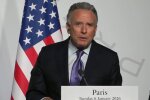
George Friedman, founder and chairman of Geopolitical Futures, argues that the removal of Nicolás Maduro is less about Caracas and more about strangling the last significant Russian outpost in the Western Hemisphere. While the capture of the Venezuelan leadership draws headlines, the broader American strategy hinges on the control of the Caribbean Sea.
"You can't really deal with that question until you control the Caribbean ocean," Friedman said in an analysis of the operation.
The imperative is an old one, dating back to the Cuban Missile Crisis, but the threat has evolved. Havana recently signed a treaty renewing defense ties with Moscow, a pact finalized amid threats that Russia might deploy military assets to the region. For Washington, this revived a nightmare scenario where hostile forces create a pincer around the Gulf of Mexico, potentially choking off the primary artery for American maritime trade.
To break this encirclement, the United States has targeted Cuba’s economic lifeline.
The island’s economy is already "ruined," sustained largely by shipments of crude oil from its ideological allies in South America. By severing the Venezuelan supply line, Washington places existential pressure on Havana. Friedman suggests the goal is to trigger a political and economic crisis deep enough to fracture the communist government's hold on power.
"If there was any ever a time for regime change... in Cuba, this is the time," he said.
The strategy effectively places Cuba in a vice. With American military assets concentrated in Texas and Florida to the north, and the flow of energy cut off from the south, the geopolitical squeeze is designed to force a capitulation that diplomacy never achieved. The Russians, currently bogged down in their own periphery, are ill-equipped to bridge the gap.
There is a secondary benefit to this hard-power approach.
Friedman points out that rationalizing the Latin American economy requires "clearing the decks" of the drug cartels that hold vast amounts of capital and influence. A stabilized region cannot emerge while narco-trafficking remains a dominant industry.
But the primary focus remains the security of the American mainland. By neutralizing the Venezuelan support system, the U.S. isolates Cuba, aiming to finally close the door on Russian influence in the Americas.
This is the leverage point.
"The Cuban question is more important," Friedman said.