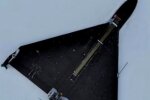
On December 29, 2025, Russian Foreign Minister Lavrov claimed that Ukraine allegedly attempted to strike Putin's residence with 91 drones on the night of December 28-29, 2025. All were supposedly destroyed, prompting Russia to revise its negotiating position, with targets and timing for retaliatory strikes already determined. The Russian Foreign Minister also claimed Ukraine was behind the attack without providing any evidence. No drone threat near Putin's Valdai residence was reported on the night of December 29.
Lavrov claims Russia is not "withdrawing" from negotiations with the U.S. but will "revise its negotiating position" following the fabricated "attack on Putin's residence." This is a typical Kremlin scheme: remaining in the process only on paper while essentially undermining the substance of negotiations by advancing harsher demands, stalling for time, and turning dialogue into a series of ultimatums. This is precisely how Moscow attempts to make negotiations manageable for itself and unsuitable for achieving real peace. Lavrov declares "state terrorism" by Ukraine but publishes no evidence that would allow independent verification of his claims. Russia baselessly asserts an attack by 91 long-range drones and immediately ties this statement to revising its negotiating position, indicating the Kremlin's lack of desire to reach an agreement. By calling Ukraine's actions "state terrorism," Moscow attempts to substitute the subject of negotiations, trying to impose the idea that Russia should be persuaded away from "punitive retaliation" against Ukraine instead of discussing ending the war and withdrawing troops. This is done to legitimize future Russian strikes and psychologically pressure mediators. Lavrov's statement appears to be preparation for informational justification for new escalation: first create a picture of "Ukrainian aggression" and "terrorism," then use it as an argument for why Russia is supposedly "forced" to strike in response. Thus, Moscow lays the groundwork for strikes on government district buildings in Kyiv as symbolic and political targets. Lavrov's baseless accusations may be used to "legitimize" this escalation, as if Russia is "responding." Lavrov's phrase about "targets and timing" already being determined reveals the real purpose of the statement – to strengthen Russia's negotiating position through blackmail.
U.S. President Donald Trump stated that Vladimir Putin informed him about the alleged attack by Ukrainian drones on one of his residences. According to Trump, he views such actions negatively and called this move "not good." "I don't like it. It's not good," Trump said. He acknowledged that "possibly" this accusation is false and no such attack occurred, adding: "But President Putin told me this morning that it happened." "I just heard about it, but I don't know anything about it. That would be very bad," Trump told reporters at his Mar-a-Lago resort in Florida. The U.S. President also called his conversation with Putin "productive," though noting that issues remain to be resolved for concluding a peace agreement in Ukraine. Trump informed Putin about some results achieved with Zelensky's team. Putin emphasized in conversation with Trump that Russia intends to work closely and productively with the U.S. to find peace.
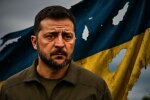
Ukrainian President Volodymyr Zelensky refuted Russia's claims about a drone attack on Putin's residence, calling it another lie. According to Zelensky, the Kremlin's goal is to blow up progress in peace negotiations with the U.S. and justify future strikes on Ukraine's capital. "It's clear that yesterday we had a meeting with Trump. For the Russians, if we don't have a scandal with America but have progress, that's a failure. They don't want to end the war, and now with their statement they're preparing the ground for strikes on Ukraine's capital and government buildings," he stated. Ukraine's President called on the U.S. and Europe to respond appropriately to such Russian provocations and support Kyiv's security.
Now let's carefully examine the Russian side's statement. Russian Foreign Minister Sergey Lavrov publicly accused Ukraine of allegedly attempting to attack Vladimir Putin's residence in Valdai using 91 drones, all of which, according to the Russian Ministry of Defense, were shot down. Meanwhile, data disclosed by the Russian side itself raises serious doubts about the plausibility of these accusations.
According to the Russian Ministry of Defense's report, 49 of the 91 drones were shot down over Bryansk Oblast – approximately 500 kilometers from Valdai. Another drone was allegedly intercepted over Smolensk Oblast, located approximately 350 kilometers from the stated "target." The remaining 41 UAVs, according to the Russian version, were shot down within Novgorod Oblast, which has considerable territory. Even in this case, we're talking about a distance of approximately 80-100 km from Putin's presidential residence in Valdai. Under such circumstances, a logical question arises: how did the Russian side predetermine the flight direction of these drones and their final target? Especially since from a geographical standpoint, they could have been heading not to Valdai but, for example, toward Saint Petersburg or Pskov – cities already regularly attacked by Ukrainian drones. Meanwhile, Russia attacks Kyiv with drones almost every other day. They constantly fly over central Kyiv and the Ukrainian president's residence. So the Russians supposedly shot down Ukrainian drones at 500, 350, and 100 kilometers from one of Putin's many residences. While Russian drones constantly attack Kyiv and are shot down literally a kilometer or less from Zelensky's residence. Imagine the difference between 1 kilometer and 500, 350, and 100 kilometers. Moreover, a Russian cruise missile has already struck the Ukrainian government building.
In October 2022, Russian Defense Minister Shoigu claimed Ukraine was preparing to use a "dirty bomb" at the front. This was complete fake news designed to distract attention from brutal Russian missile and drone strikes on Kyiv. Furthermore, according to American statements, they had information from Moscow at that time about the possibility of Russia using a tactical nuclear bomb at the front. A large Russian military group was effectively surrounded on the right bank of the Dnipro then. And the Russian General Staff saw using tactical nuclear weapons against Ukrainians for intimidation as the only way out. American special envoys came to Kyiv and pressured Ukrainian leadership to allow a large Russian military group of 20-30 thousand fighters, mainly consisting of the most combat-capable airborne units, to pass through surviving bridges across the Dnipro to the left bank without strikes. The Ukrainian side was forced to do this. But the Russian tactics of intimidation and brazenly accusing Ukrainians of intending to use some "dirty bomb" while preparing to use tactical nuclear weapons themselves was simply cynical and inhumane.
The Kremlin is now trying to replace the negotiation process with "diplomacy of fear," the essence of which is "you accept Russian conditions, or we strike – strikes we ourselves announce." Moscow has used negotiation tracks for years as a mechanism to buy time: we talk – but simultaneously continue attacks and raise stakes. Even in December this year, amid intensive contacts and discussions of peace formats, Russia conducted large-scale air strikes on Ukraine three times. The Kremlin isn't "moving toward peace," it's essentially "trading" war. Lavrov's phrase about unwillingness to withdraw from negotiations sounds like "responsibility," but essentially it's a way to maintain a channel of influence over the U.S. and demand concessions, covering this with "new circumstances." Russian diplomacy has already publicly spoken about slow progress in contacts with the U.S., and at such moments the Kremlin is particularly interested in disrupting the pace of negotiations and turning discussion into blackmail.
Finally, the number of drones allegedly participating in the attack, announced by Sergey Lavrov, significantly exceeds the total number recorded by Russian air defense across all of Russia that night. Moreover, Russians themselves exposed the Kremlin fake about the drone attack on Vladimir Putin's residence in Novgorod Oblast. Information about the attack was refuted by local residents who noted that air defense systems were not heard operating in the city.