In the history of independent Ukraine, there is no day more significant or more ominous than this one. On this day—more precisely, at four o'clock in the morning—the Verkhovna Rada of Ukraine made a decision that rendered inevitable the war in which thousands of our children have already perished, and many more will die in the near future. It all began like this...
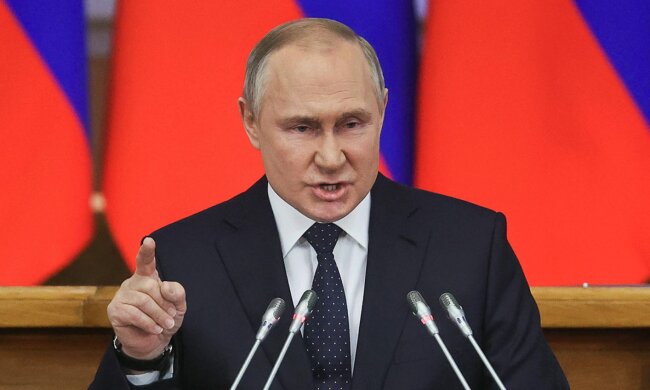
On November 26, 2014, the Russian Federation Council approved the state budget for the following year, allocating a record $81 billion to military funding. [1, 2, 3] Why so much, considering that during Boris Yeltsin's presidency, the Russian army’s upkeep amounted to only between $6 billion and $18 billion? [4] It was clear to everyone that the neighbor who had already seized our Crimea and half of the Donbas had no intention of stopping. Consequently, the intellectual world held its breath, waiting for Ukraine's response. But one man in the United States was more interested than most.
Five months earlier—on June 16, to be exact—Zbigniew Brzezinski made a statement worthy of Nostradamus. In the heat of the Russia-Ukraine war, he asserted that this battle would not be long. Not because Ukrainians were heroes, but because Russia was economically unprepared for a protracted conflict. It would need another ten years of preparation, he said. He was nearly right: Putin made his second attempt eight years later.
But the second invasion might never have happened.
Speaking at the Wilson Center, Brzezinski outlined two possible scenarios: Ukraine would either arm itself, thereby making a second invasion impossible, or refuse to invest in defense, making the temptation to invade irresistible: "If the Ukrainians resist, they will have weapons. And we will provide some of those weapons even before the invasion. Because without them, the temptation of an invasion and a preemptive strike could become irresistible." [5]
Eleven years ago, Putin made his first move in this new game. Much like an ancient Prince of Kyiv, he effectively declared, "I am coming for you!" How would Ukraine respond? Would it relax and wait for Putin like Rembrandt’s Danaë waiting for Zeus? Or would the new "guarantor of the Constitution" arm his military and close Ukraine’s skies to the enemy forever? Analysts on both sides of the Atlantic were placing their bets...

What was happening in Ukraine at that time? Ukraine was at war. The Ilovaisk disaster was already behind it, while others were yet to perish at Debaltseve. How do normal countries behave during wartime? They restructure their economies on the principle of "guns over butter." It is often painful. For instance, during World War II, the USSR was forced to mobilize over 60% of its national income. It was also difficult for the British, who spent about 55% of their GDP on defense. However, a completely different situation emerged in the United States, where arms production was limited to 41% of GDP. [6, 7] There, unemployment vanished, incomes and savings rose, and the economy experienced a sharp boom.
Brzezinski was not the only one wondering whether Ukraine would defend itself and to what extent. However, optimists were in for a cold shower: on December 23, our government presented a draft state budget to parliament, allocating just over 5 billion hryvnias for the development of the Armed Forces' weaponry and military equipment. [8] Nevertheless, the decision rested with our lawmakers, who had the opportunity to reject this "betrayal budget" and adopt a plan for a full-scale defense of Ukraine.
But on December 28—after a month of consultations with the owners of other political "stables"—President Poroshenko arrived at parliament. Echoing his predecessor, he demanded a unanimous vote from his faction for the 2015 budget: "Anyone laughing—please leave the faction. If you don't like the president, you are free to go. We are a democratic faction, and we must be one team." [9]
Ultimately, twelve lawmakers from the Petro Poroshenko Bloc abstained from voting, but the People's Front voted in its entirety, as did nearly all of the Radical Party. The missing votes were provided by several members of Samopomich.

The 2015 draft budget, introduced in the Rada late on the night of December 23, contained several provisions contested by many deputies. It seems strange now, but the proposed amendments concerned various articles except for the primary one. However, Prime Minister Arseniy Yatsenyuk, presenting the bill, dutifully emphasized the core point. He stressed that, for the first time in its history, Ukraine was adopting such a high defense budget: "In fact, the total funding for national security and defense is 90 billion hryvnias," the Prime Minister declared. This included 6.9 billion hryvnias in state guarantees for Ukroboronprom enterprises to produce new equipment and repair existing stock. [11] It is baffling that these figures caused no public outcry. Even at an exchange rate of 16 hryvnias to the dollar—slightly better than the official NBU rate at the time—our entire defense budget was set to be limited to $5.6 billion. (This compares to $81 billion in the Russian Federation!) And for the production of new equipment, the "people's government" allocated a mere $0.43 billion. Thus, the aggressor received an absolutely clear answer: Ukraine does not intend to defend itself.
We do not know what backroom deals were made, but our officials kept their word. According to SIPRI data, Ukraine's actual military spending in 2015 was nearly half of what was planned: only $2.96 billion. The following year, it was even lower: $2.94 billion. [12]
We must understand why our children are dying today. It is because eleven years ago, our president, our government, and our parliament allocated not 40%, but only 3% of GDP to our defense. It is because we, the voters, do not watch the hands of our rulers. It is because no one in the Verkhovna Rada of Ukraine stood up to tell their constituents plainly and honestly that they had been betrayed. It is because on that day, December 29, 2014, we did not take to the Maidan.
Sources:
[1] "Russia's defense budget to reach $81 billion in 2015," Ereport.ru, 30.10.2014 https://www.ereport.ru/news/1410301217.htm
[2] Mukhin V. "Military budget of a special period," - Nezavisimoye Voyennoye Obozreniye, 28.11.2014 https://nvo.ng.ru/realty/2014-11-28/1_budget.html
[3] "Putin approved the budget for 2015 and the planning period of 2016 and 2017," - TASS, 03.12.2014 https://tass.ru/ekonomika/1619123
[4] SIPRI. Military expenditure (current USD) https://data.worldbank.org/indicator/MS.MIL.XPND.CD?locations=UA-RU&name_desc=true
[5] Zbigniew Brzezinski "Confronting Russian Chauvinism," - The American Interest, 27.06.2014 http://www.the-american-interest.com/2014/06/27/confronting-russian-chauvinism/
[6] Annual military spending as a share of national income of selected major powers during the Second World War from 1939 to 1944, - https://www.statista.com/statistics/1333250/wwii-military-spending-share-income/?srsltid=AfmBOoowD9h4z9CHU8Kywk08JMOEZEHbME7CFnjA7epSnXz0yoWs3xTo#:~:text=Tabl
[7] What is the Total US Defense Spending? - https://www.usgovernmentspending.com/defense_spending_history#:~:text=US%20Defense%20Spending%20History,during%20the%20War%20on%20Terror.
[8] Explanatory note to the draft Law of Ukraine "On the State Budget of Ukraine for 2015", - https://w1.c1.rada.gov.ua/pls/zweb2/webproc4_1?pf3511=52941
[9] "Poroshenko arrived at the Rada," - LB.ua, 28.12.2014 https://lb.ua/news/2014/12/28/290822_poroshenko_prishel_radu.html
[10] Voting for the Budget - Verkhovna Rada of Ukraine - 29.12.2014, - https://www.youtube.com/watch?v=IXfT1Q9fsUo
[11] "Rada passed the state budget law for 2015 with the condition of its revision by February 15 after negotiations with the IMF – 233 votes 'for'", "Interfax-Ukraine", 29.12.2014, - https://interfax.com.ua/news/general/242239.html
[12] SIPRI: https://data.worldbank.org/indicator/MS.MIL.XPND.CD?locations=UA-RU&name_desc=true