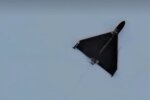
A number of Russian kamikaze drones crashed overnight due to wing icing, according to technology expert Serhii 'Flash' Beskrestnov.
He noted that while a "winter version" of the Shahed exists, featuring internal heating for components, it lacks a de-icing system for the wings, making them susceptible to ice buildup.
"This requires a number of factors: high humidity or rain, and a sharp temperature drop from above freezing to sub-zero. This phenomenon usually occurs in the range of -5 to +5 degrees Celsius," Flash explained.
At the same time, the expert noted that the Shahed is capable of carrying a heavy load. If the icing is minor—not altering the wing contour or disrupting the UAV's overall balance—the drone will continue its flight. Otherwise, it will crash.
When asked if such weather conditions were present yesterday, Flash confirmed they were.
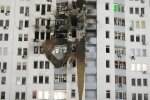
Recall that on the night of January 9, Russia launched a combined strike on Ukraine's critical infrastructure. The Air Force recorded 278 aerial attack weapons, including approximately 150 Shaheds. Defenders shot down or suppressed 244 targets: 226 enemy UAVs, 8 Iskander-M/S-400 ballistic missiles, and 10 Kalibr cruise missiles. The main direction of the attack was the Kyiv region.
Serhii "Flash" Beskrestnov is a military radio technology expert and head of the Center for Radio Technologies, who regularly warns Ukrainians about new threats from Russian UAVs. According to his assessments, the Russians are constantly modernizing Shaheds, installing cameras, mesh modems to create airborne relay networks, and even Starlink terminals.
Recently, Flash reported the discovery of Shaheds equipped with MANPADS, posing a new threat to Ukrainian aviation. The expert also noted that the effectiveness of Ukrainian air defense in countering mass drone attacks is unique: no other country in the world possesses such experience and capabilities, and for European defense systems, such a scale of threats would be critical.