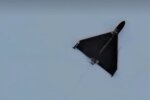
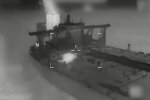
Russian occupation forces are actively modernizing Shahed attack drones, aiming to transform them from "blind" projectiles flying by coordinates into guided weapons capable of bypassing Ukrainian electronic warfare (EW) systems and operating within a unified network.
Serhiy "Flash" Beskrestnov, a military expert on communications and electronic warfare, discussed these developments in an interview with Yuriy Romanenko.
According to the expert, the technological war is evolving rapidly, with the enemy attempting to outpace Ukrainian countermeasures, particularly regarding navigation.
The Antenna War: From 4 to 16 Elements
Beskrestnov noted that the Russians have significantly bolstered the resilience of their drones against electronic warfare. While Shahed and other UAVs previously used 4-element Kometa antennas (or their Iranian analogs) capable of filtering out up to four jamming sources, the enemy is now shifting to much more powerful solutions.
"This is a 16-element antenna manufactured in China. There is already a Russian version as well. A massive antenna like this is installed on Shaheds and, naturally, can theoretically counter 16 ground-based EW sources. This means we need to increase the number of these sources, and it is an endless process," the expert said while demonstrating a sample.
Ditching Mobile Networks for Chinese Mesh Systems
A key development in recent months has been Russia's attempt to convert long-range drones into FPV-style weapons with manual terminal guidance. Initially, the enemy tried using Ukrainian mobile networks (LTE) for video transmission and control by installing modems with SIM cards. However, after realizing the vulnerability of this method—specifically the ability of Ukraine to track and block them—the Russian Federation changed tactics.
"They realized that building a control system based on our mobile networks was a bad idea because LTE networks are under our control. Consequently, the Russians implemented a very interesting measure—they introduced a so-called 'quarantine.' Now, all roaming SIM cards entering Russian territory are barred from data services for 24 hours after the first call," Beskrestnov explained.
Instead of mobile connectivity, the occupiers have begun mass-installing Chinese Mesh modems on UAVs such as the Gerbera and Shahed. This allows the drones to communicate with each other and relay data over long distances via a daisy-chain network, bypassing cellular towers.
"Mesh means there are many of these modems, and they are all interconnected. It’s a web. If there are, for example, 100 UAVs in the sky over us, and 50 have these modems, they create a large network over our territory. If we shoot one UAV down, it’s not a problem; the network reconfigures itself," said Serhiy "Flash."
According to him, these modems are high-power and capable of maintaining a direct communication channel for up to 200 kilometers in the air.
Upgrading the Warhead
Beyond communication systems, the enemy is also experimenting with payloads. The expert pointed to recorded instances of Shaheds carrying a dual warhead weighing 100 kg.
"Just imagine a 100 kg high-explosive fragmentation charge and the amount of damage it can inflict," Beskrestnov concluded.
It is also worth noting that discussions have begun in Ukraine regarding strict control of the SIM card market.