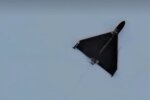
Russian occupation forces have begun systematically deploying Starlink satellite communication terminals on their attack drones, specifically the Shahed and Molniya models. Concurrently, the issue of tightening control over mobile number circulation is gaining renewed urgency in Ukraine.
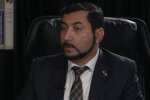
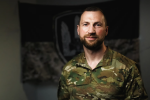
Ukrainian military expert and radio technology specialist Serhii "Flash" Beskrestnov discussed these developments in an interview with journalist Yurii Romanenko.
New Threat: Starlink on Molniyas and Shaheds
According to the expert, Starlink terminals began appearing en masse on enemy long-range UAVs only about ten days ago. While early examples appeared to be makeshift modifications, the Russians have now shifted to factory-level integration.
"Suddenly, the Russians have a lot of Starlinks flying at us on UAVs—specifically attack UAVs. We are also seeing Starlinks appearing on their equipment, including armored vehicles," Beskrestnov noted.
He highlighted the rapid evolution of satellite communication integration into Russian Molniya drones.
"Whereas the first UAVs had a Starlink Mini strapped to the Molniya with tape in a haphazard way, the latest ones we've seen feature organic, clean integration into the Molniya's fuselage," the expert explained.
Serhii "Flash" explains that the presence of Starlink turns a relatively cheap drone into a high-precision weapon that is invulnerable to electronic warfare (EW) and can be controlled by an operator from any distance. He dismisses arguments regarding the high cost of such a solution.
"A high-quality thermal imager for an FPV drone costs about the same as a Starlink, give or take. So the money isn't the issue... A Molniya with Starlink will most likely reach its target and strike it accurately. It is, of course, unaffected by EW," the specialist emphasized.
Passport-Linked SIM Cards: An Inevitable Step?
The interview also touched on the Russian Ministry of Digital Development's plans to create a unified database of IMEI codes by 2026 to counter Ukrainian drones. Commenting on the situation in Ukraine, Beskrestnov did not rule out that Kyiv might also decide to sell SIM cards exclusively upon presentation of a passport. The main reason is the enemy's uncontrolled access to Ukrainian mobile networks.
"I don't rule out the possibility that we will also eventually require passports for SIM card sales... The Russians will still find ways to buy 10 or 20 cards. But at least they won't be able to do what they do now: take a box, buy 3,000 cards from a dealer, and transport them to Russia. Right now, there is absolutely no control; they have access to any volume of our SIM cards," the expert explained.
At the same time, "Flash" noted that implementing such a rule immediately in Ukraine would be technically difficult due to the massive existing base of anonymous subscribers and the use of SIM cards in technical devices (modems, alarms, meters) that are hard to access.
Watch the full video of the conversation: