China has proposed energy assistance to Ukraine, but American diplomats are accusing Beijing of backing Russian aggression.
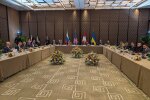
As Hvylya reports, citing Fox News, a telling scene unfolded at the Munich Security Conference.
The Chinese delegation extended a helping hand to Ukraine while simultaneously remaining the largest buyer of the oil powering Russia's military machine.
US Ambassador to NATO Matthew Whitaker did not mince words. Speaking at a panel discussion in Munich, he stated bluntly that China could stop the war "literally tomorrow" with a single phone call to Putin. "Beijing could stop the supply of dual-use technology and stop buying Russian oil and gas. This war is completely upheld by China," he said.
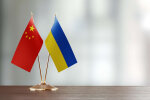
Parallel to these remarks, Chinese Foreign Minister Wang Yi met with his Ukrainian counterpart, Andrii Sybiha, in Munich to announce an additional humanitarian aid package for the energy sector. The move aims to counter Russia's systematic strikes on Ukrainian energy infrastructure, a decision for which Sybiha publicly thanked China.
However, Beijing did not disclose details regarding the size or specific content of the aid.
The Chinese side traditionally insists on its "constructive" role in resolving the conflict, denies accusations of supplying lethal weapons to Russia, and calls for a negotiated settlement. Meanwhile, American and European officials increasingly characterize Beijing as the key external sponsor of Moscow's aggression.
The facts support this position. Tracking of cargo flows shows that in January, Chinese ports received about 1.65 million barrels of Russian crude oil per day—the highest figure since March 2024 and the second-largest monthly volume since the 2022 invasion. These funds directly replenish the budget financing a war the West is trying to choke off with sanctions and price caps.
Beyond oil, Russia actively uses Chinese technological components and industrial goods to produce drones and other weaponry—a fact Western representatives state openly, though China denies participation in these schemes.
The picture emerging in Munich was telling: Beijing is simultaneously offering help to restore Ukrainian power plants while financing the army destroying them. For Washington, this is not a contradiction but a conscious choice. For Brussels, currently weighing new sanctions against Chinese companies supplying dual-use goods to Russia, Beijing's "humanitarian gesture" only complicates diplomatic calculations.
It was previously reported who is really managing Russia's war against Ukraine.