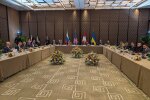
Negotiations to end the war in Ukraine are resuming in Geneva, but the situation surrounding them has become even more convoluted than a week ago. Despite some signs of converging positions at the start of the year, the past week has added a series of complications from both the Ukrainian and Russian sides.
According to Hvylya, this was reported by The Economist.
In early 2025, both sides appeared to be gradually moving toward each other. A meeting in Paris left Kyiv officials feeling that American negotiators—Steve Witkoff and Jared Kushner—had finally begun to listen to Ukraine's interests. Contours of bilateral security arrangements, more serious than expected, were being discussed. More pragmatic representatives appeared in both delegations; notably, former military intelligence chief Kyrylo Budanov effectively took charge of the Ukrainian delegation. A source close to the negotiation process estimated the chances of a breakthrough at 50-50.
The week that cooled the optimists
However, the past week has cast these hopes into doubt. An article in the Financial Times regarding alleged American pressure to hold "quick and dirty" elections in Ukraine caused a stir in Kyiv. As it turned out, however, it is Zelensky's own team lobbying for these elections, not Washington. Furthermore, no concrete deal exists to present to voters, nor is there an agreement on the sequence of steps. Yet even this was enough to stall the negotiating momentum.
Even more painful was Moscow's move: the Kremlin unexpectedly reinstated Vladimir Medinsky as head of its delegation—a notorious demagogue known for his obsession with historical fantasies. Both events indicate that actors in both camps are not interested in achieving peace.
Structural problems: Putin holds the veto
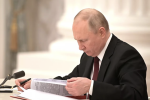
Even without these complications, the parties remain far from a real agreement. The American negotiation model—which is not a single process but several parallel tracks—effectively allows Russia to control the pace and direction. Putin holds a veto over any US-Ukraine security deal; he simply needs to refuse a ceasefire.
The territorial issue remains unresolved. Russia's war was never purely about land; at its core lies the desire to subordinate Ukraine's foreign policy independence. This is why security guarantees and the prospect of EU membership are fundamental for Kyiv. Nevertheless, Moscow's demand for Ukrainian forces to withdraw from fortified positions in Donbas has become a symbolic stumbling block.
The American side proposed a compromise: the creation of a demilitarized "free economic zone," possibly managed by a so-called Trump "Peace Council." While this idea appeals to the American president, it is unlikely to pass through US legislation, especially if it requires de facto recognition of occupied territories. It remains unclear whether lead negotiator Witkoff realizes this.
Internal divisions within the Ukrainian delegation
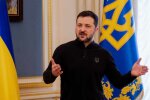
Centrifugal forces also exist within Kyiv's own team. One wing, centered around Budanov, believes Ukraine benefits from a swift deal through American mediation and that the window of opportunity may soon close. Another wing—reportedly still influenced by the controversial former head of the President’s Office, Andriy Yermak, who was dismissed following a corruption scandal—is much more skeptical. Zelensky appears to be balancing between them while maintaining his own vision of the situation.
Is time working for or against Ukraine?
The question of whether a quick deal benefits Ukraine remains open. There are risks in both directions. Putin is clearly not a man whose word can serve as the foundation of a treaty. Some analysts are convinced that Ukraine's strategic position could improve over time due to military reforms and mounting demographic and economic pressure on Russia. Europe holds a similar view, though primarily driven by its own interests: buying time to ramp up its own defense production.
But Ukraine has virtually no room for error. While Russia's problems are theoretical and blurred over time, Ukraine is experiencing a crisis now: a shortage of personnel at the front, and business and daily life under constant blackouts.
The ideal scenario for Kyiv is a long-term agreement backed by ironclad American security guarantees. But this requires real pressure on Russia, not just on Ukraine. So far, evidence that Washington is prepared to exert such pressure is clearly insufficient.
Earlier, Putin's camp revealed their main goal at the negotiations.