On the night of November 28-29, the Russian army again struck Kyiv with drones and missiles. Russia launched a combination of several hundred drones and dozens of missiles at the land, mainly targeting energy infrastructure and residential areas. At least three people were killed, nearly thirty were wounded, and over 600,000 households were left without electricity, of which over half a million were in Kyiv alone. The western part of the city was practically disconnected from electricity, which had serious consequences for water supply, heating and traffic.
This attack is not an exception, but the culmination of what has been happening since early autumn. The UN Human Rights Mission in Ukraine notes that in October and November, Russian forces significantly intensified attacks on the energy system throughout the country, with consistently high civilian casualties. UN experts openly warn that attacks on power plants, transmission lines and distribution networks immediately before winter risk causing long-term disruptions to heating, electricity and basic services for millions of people.
Meanwhile, in early November, Russian strikes left the entire Donetsk region without electricity, as well as tens of thousands of people in other parts of Ukraine. On November 25, the Ministry of Energy announced that on that day alone, more than 102,000 users in five regions were left without electricity due to missile and drone attacks, including Kyiv, where residential and commercial buildings and at least thirteen infrastructure facilities were damaged.
The picture is very clear. Russia is waging a winter war against civilian infrastructure. Its goal is not to move the front line, but to destroy everyday life in Ukraine. When it hits a substation in the capital or a heating plant in an industrial region, the target is not "facilities" but the people who live in these cities. Each such attack affects hospitals, schools, water supply, public transport and the work of ordinary businesses. What is a crime if not this?!
While this is happening on the ground, a parallel scene is unfolding at the political level that seems to have come from another planet. American intermediaries, Russian representatives and some European interlocutors have been working for weeks on the text of a "peace plan" that is supposed to form the basis for any negotiations to end the war. Information has leaked into public life that the initial version of the plan had 28 points and that it was largely based on a document that had previously been prepared by the Russian side and handed over to Donald Trump's team.
In other words, the proposal to end the war begins with a document written in Moscow, not from the position of the country that was attacked. According to Reuters, several US officials expected Ukraine to reject such a text, as it would effectively require it to agree to lose part of its territory and limit its own security options. Only after Ukraine's objections and the sharp reaction of European allies was the plan officially shortened and "reworked," but Russia publicly demands that any new version remain in the "spirit" of the Trump agreement from their meeting at the Alaska summit. I would say, in the spirit of the promises Trump made to him then! For Ukraine, such a combination of facts is devastating, but not surprising. While the UN warns about increasing civilian casualties and the risk that millions of people will be left without heating and electricity in the middle of winter, the Russian aggressor gets the opportunity to make its political text at least a partial basis for the American "peace plan."
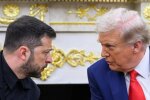
Trump's statements further expose all this. He publicly states that a deal is "very close" and that the war could end quickly, without a word about the simultaneous continuation of massive attacks on Ukrainian cities. In his language, the problem is not Russian missiles, but Ukrainian persistence and resistance. This approach opens space for the most dangerous idea – that the war is essentially a consequence of Kyiv's "stubbornness," not Russian aggression.
Currently, Ukraine faces dual pressure. On one hand, military pressure comes from the air: dozens of civilians were killed and wounded in major waves of attacks in November alone, with repeated strikes on energy facilities and residential buildings in Kyiv, Zaporizhzhia, Donetsk region and other areas. On the other hand, political pressure comes through formulations about "realistic compromise" increasingly heard in some European capitals and from Trump's circle. The essence of this pressure is simple: Ukraine is asked to recognize that it will not regain all its territory, accept permanent Russian presence in part of its country, reduce its army and limit its future security policy, especially regarding NATO membership. In return, it will receive an empty promise to stop attacks and certain economic packages for reconstruction. This is presented as a "smart deal."
But there is nothing smart about a crime victim agreeing to lasting consequences of that crime. There is no rational argument that could explain why Ukraine signed a document that rewards the aggressor and establishes a new rule: a country that is cruel enough gets recognition for its conquests. Such a precedent would destroy what little remains of the international order.
Europe today finds itself in an unenviable position. On one hand, the European Union is working on mechanisms to use frozen Russian funds to finance Ukraine's defense and budget, including a proposal for a €140 billion package that will only be repaid after Russia pays war damages. At the same time, there is serious resistance in the EU even to such a step, let alone a tougher stance on Moscow.
On the other hand, European governments were surprised to learn that part of the American peace plan is actually based on a Russian document. Many EU leaders understand that accepting such a plan would mean long-term defeat not only for Ukraine, but also for European security. But at the same time there is fear of escalation, fear of conflict with Russia and fear of domestic political consequences of a prolonged war. But this is exactly what Russia wants. Fear in Europeans' eyes!
This gap – between understanding the dangers and unwillingness to draw clear red lines – is a key problem in contemporary Europe. Because in Kyiv there is no dilemma: peace cannot be an agreement where the aggressor keeps the fruits of its aggression, and the victim becomes the culprit. In Kyiv, something else is very clearly expressed: the war does not end on the day any paper is signed, but on the day when Russia realizes that force does not pay.
For Ukrainian society, the current situation has no "neutral" dimension. People living in cities affected by drones and missiles are not discussing the wording of points in a 28-point or 19-point plan. They know: if they agree to lose territory now and limit future defense, the next war will come sooner and be worse. If they agree to a document written in Moscow, on Russian terms, Russia will no longer have to fight. It will be enough for it to threaten – and it will get what it wants. That's why it's important to call things what they are, without distorting them. The so-called Trump "peace plan" is not a proposal to Ukraine, but a political demand to end the war so that the aggressor gets what it could not win with threats of nuclear weapons and mass murders of civilians. The same applies to European ideas about "ending the war" that do not begin with the basic principle – that Ukraine has the right to full territorial integrity and the right to choose its own security mechanisms. Everything below that is not peace, but a postponed crisis.
As the UN, humanitarian organizations and Ukrainian authorities warn that attacks on the energy system could leave millions of people without basic living conditions during winter, everyone who is serious about peace must first answer a simple question: are they ready to say that Russia must retreat and pay the price for what it has done? If that answer is absent, then this is not a matter of peace policy, but an attempt to remove the problem from consideration at the expense of another country.
Ukraine cannot afford the luxury of believing in such shortcuts. For it, this war is not a topic of negotiations, but a matter of survival. That is why it rejects plans that require it to give up part of itself. That is why it continues to defend itself, even when part of the country is beyond control. And because of this, it has the right to ask for clear, not half-hearted support from its allies.
Russia today is waging a war with a clear goal: to break the will of the Ukrainian people by destroying their basic living conditions. That's why it attacks electricity, water, schools, hospitals and residential buildings. This is a war against the people, not against the army. And there is no doubt about this – Moscow wants to show that ordinary people have no right to security, warmth or life uninterrupted by sirens. That Ukrainians have no right to exist. Europe can pretend to be tired, but it cannot pretend not to understand what is being decided here. If it gives in now, it will have nothing left to defend even within its own borders. That's why this war is essentially simple: either the right of people to exist will prevail, or the right of force to decide who is allowed to exist will prevail.
Ukraine has chosen its side. Europe still has time to choose its own. But that time is running out.