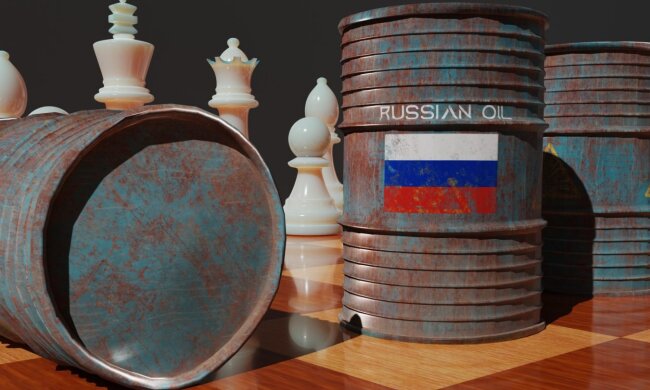
Russia's Central Bank has officially acknowledged that the economy faces difficult times ahead due to falling oil prices. In its updated macroeconomic forecast, the regulator lowered the expected price of Urals crude to $45 per barrel—the lowest level since the pandemic era.
According to a report by The Moscow Times, as cited by Hvylya, this new assessment is 25% lower than the parameters set in the Russian budget ($59) and $10 less than the October projections. The regulator's pessimism extends into the future, with the 2027-2028 forecast also downgraded to $50-55 per barrel.
"Observed significant risks are associated with oil prices. The global market has shifted toward a surplus, and for Russia, the situation is further complicated by sanctions," Central Bank Chair Elvira Nabiullina stated while explaining the revised figures.
Pressure on the aggressor state's economy intensified after the United States imposed sanctions on Rosneft and Lukoil in late October 2025, while India began turning away from "toxic" raw materials. Price dynamics confirm these fears: while Urals was priced at $53.70 in October, the price collapsed to $41 by January.
Financial losses are already estimated in the tens of billions. According to Gazprombank estimates, Russia missed out on $33 billion in export revenue last year and is set to lose another $20 billion this year.
If oil prices stabilize at January levels, the Russian budget faces a colossal shortfall. The deficit in oil and gas revenues could reach 4.3 trillion rubles, ballooning the total budget gap to 8 trillion rubles (approximately $104 billion).
Experts warn that the Kremlin will be forced to take unpopular measures, such as cutting spending or urgently seeking domestic funding. Analysts predict the introduction of new levies on businesses, specifically a "voluntary" windfall tax on excess profits.