The United Kingdom and its European allies are considering the physical interception and seizure of vessels belonging to Russia's "shadow fleet." This measure is being discussed as a radical step to increase pressure on Moscow's military economy nearly four years after the full-scale invasion of Ukraine.
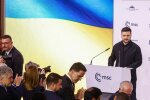
According to Bloomberg, the proposal was a key focus of closed-door talks held by British Defense Secretary John Healey and his counterparts from the Joint Expeditionary Force (JEF)—a group including Baltic and Nordic nations—on the sidelines of the Munich Security Conference. The primary objective is to sever the flow of oil revenues that continue to fund Vladimir Putin's war effort.
"The atmosphere and understanding were that we need to be more proactive. The message is: countries providing flags to shadow fleet vessels must know that other nations may take action," stated Estonian Defense Minister Hanno Pevkur.
Sources indicate that Admiral Sir Richard Knighton, the head of the Royal Air Force (formerly of the Royal Navy), presented allies with specific operational variants, including joint naval missions to board and confiscate vessels. This approach mirrors recent aggressive tactics by the United States, which has successfully intercepted tankers linked to the regime of Nicolas Maduro in Venezuela.
However, total consensus has not yet been reached. Estonian Foreign Minister Margus Tsahkna noted that some member states remain cautious due to "fear of escalation" with the Kremlin. Currently, the Russian shadow fleet consists of approximately 1,500 tankers using "flags of convenience" and opaque ownership structures to evade the G7 price cap. Over 600 of these vessels are already under sanctions by the UK, US, and EU.
Western allies have already transitioned to active enforcement in recent weeks. On January 7, the UK provided critical support to a US operation that seized the Russian-flagged tanker Marinera (formerly Bella 1) following a high-seas pursuit in the North Atlantic. Furthermore, on January 22, the French Navy boarded the oil tanker Grinch in the Mediterranean after it departed from Murmansk under a suspected false flag.
In Washington, legislative efforts are also intensifying. Lawmakers recently introduced the "Decreasing Russian Oil Profits" (DROP) Act, a bipartisan bill designed to eliminate the legal loopholes that allow the shadow fleet to operate and to mandate sanctions on any foreign entity facilitating the trade of Russian crude.