Trump Administration Presents Europe with Provocative Plan to Restore Ukrainian and Russian Economies
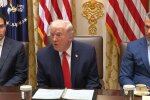
The administration of US President Donald Trump has presented Europe with a controversial plan for the economic recovery of Ukraine and Russia.
As reported by Hvylya, this is according to The Wall Street Journal.
Over the past few weeks, President Donald Trump's team has delivered a series of unilateral documents to European partners outlining the American vision for the future economic structure of Ukraine and Russia's return to the global market. These proposals have sparked a sharp dispute between Washington and traditional NATO allies, the outcome of which could fundamentally change the economic situation on the continent.
According to the publication, citing American and European officials, the documents contain detailed plans for utilizing about $200 billion in frozen Russian assets for projects in Ukraine. Among the key ideas is the construction of a powerful data center to be powered by the Zaporizhzhia Nuclear Power Plant, which is currently occupied by Russian forces.
The American Vision: Business for Peace with Moscow
Another annex to the peace proposals describes an ambitious plan to integrate the Russian economy into the global system. American companies propose investing in Russia's strategic sectors—from rare earth metal mining to oil extraction in the Arctic. The plan also envisions the resumption of Russian energy supplies to Western Europe and other parts of the world.
Some European officials who reviewed the documents expressed doubts about the seriousness of the American intentions. One compared the plans to Trump's idea of building a Riviera-style resort complex in the Gaza Strip. Another called the proposed energy deals with Russia the economic analogue of the Yalta Conference of 1945, where the victors of World War II divided Europe into spheres of influence.
Europe Pushes Back: Fear of a Strengthened Russian Economy
European nations, which have been trying to phase out Russian gas since 2022 to deprive the Kremlin of war funding and reduce their own strategic reliance on a rival, are categorically opposed to resuming energy purchases from a country they consider the greatest security threat.
Instead, Brussels plans to utilize the same frozen Russian assets, held in European financial institutions, to provide a loan to the embattled Ukrainian government. These funds are intended for purchasing weapons and maintaining state functionality amidst an exhausted budget.
European government circles fear that the American approach would grant Russia the necessary respite to restore its economy and strengthen its military capabilities. A new Western intelligence assessment, reviewed by the WSJ, indicates that the Russian economy has been technically in recession for the past six months, while issues related to the war economy and price controls pose systemic risks to the Russian banking sector.
The Battle for $800 Billion and Wall Street as the Key Player
US representatives in the negotiations argue that the European approach would quickly deplete the frozen funds. Washington, instead, plans to engage top Wall Street executives and private equity billionaires to invest and multiply these funds. According to one negotiator, under American management, the total amount could potentially grow to $800 billion.
"Our strong suit is that we actually understand financial growth," the official noted.
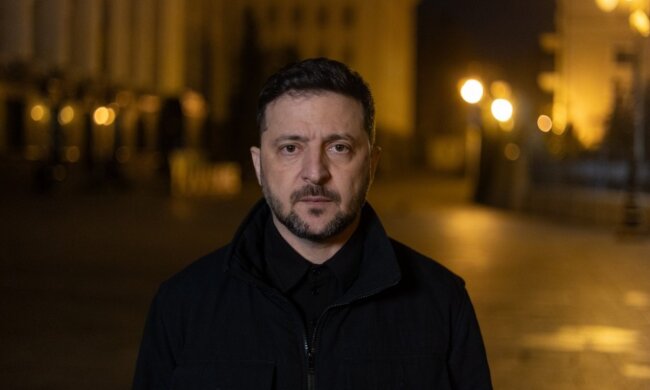
On Wednesday, Ukrainian President Volodymyr Zelensky reported productive talks with BlackRock CEO Larry Fink.
The American negotiating team views joint economic activity and energy interdependence as the cornerstone of their "business for peace" philosophy. For instance, Ukrainian data centers would receive electricity from the Zaporizhzhia Nuclear Power Plant (ZNPP)—Europe's largest, currently under Russian occupation.
Veterans Offered Silicon Valley Salaries
Donald Trump's special envoy for Russia, Steve Witkoff, and the President's son-in-law, Jared Kushner, are consulting with leading Wall Street financiers regarding the reconstruction of Ukraine's shattered economy. According to their plans, which they are presenting to the Ukrainian side, veterans would be offered to lay down their arms in exchange for high, Silicon Valley-level salaries for managing the state-of-the-art data centers that American companies would build. The chief Ukrainian negotiator, Rustem Umerov, is a regular guest at Witkoff's luxurious Miami estate.
Germany Skeptical as European Parliament Takes Decisive Steps
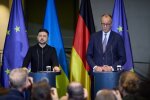
German Chancellor Friedrich Merz, speaking at 10 Downing Street alongside Zelensky and the leaders of France and the UK, stated that he was skeptical of the American proposals.
Last week, the European Parliament and EU member state governments approved a legislative agreement on the complete cessation of Russian pipeline gas purchases within two years. The vast gas pipeline network, a remnant of the Soviet era, has been almost entirely shut down or destroyed by Ukrainian saboteurs.
The German government emphasizes that European sanctions prohibit any work or financial transactions related to the repair or use of Nord Stream, which was blown up by Ukrainian operatives in 2022.
Reversing Half a Century of Policy
The transatlantic debate is overturning nearly fifty years of US and European policy towards Moscow. Presidents from Ronald Reagan to Trump in his first term pressed European allies to reconsider their dependence on Moscow for raw materials, especially gas.
Europe, however, adhered to the policy of "Wandel Durch Handel" ("Change Through Trade")—the belief that economic ties between the West and Moscow would restrain the Kremlin from war and even help export democracy to Russia. Trump's proposed second-term strategy places a similar bet, with the difference being that his administration does not anticipate Russia's transformation into a democracy.
Negotiations Intensify
The accelerated calendar of diplomacy and summits in recent weeks signals a turning point in these debates. European leaders held a phone call with Witkoff today and are set to meet in Paris over the weekend. Another meeting will take place in Berlin on Monday. Witkoff and Kushner will join these conferences online.
On Wednesday, Trump discussed the peace process during a phone call with French President Emmanuel Macron, German Chancellor Friedrich Merz, and British Prime Minister Keir Starmer. The US President told reporters that he was considering the possibility of personally attending the meeting in Europe this weekend, adding: "There are some disagreements about certain individuals; we'll see how that unfolds. We don't want to waste time."
The result of the conflict, according to several officials, has been a frenzy to implement their own plans before the US imposes its agreements.