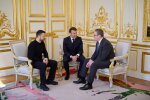
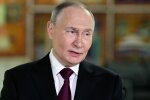
A meeting between Russian President, war criminal Vladimir Putin, and President Donald Trump's special representatives, Stephen Witkoff and Jared Kushner, concluded with Moscow doubling down on its maximalist demands for ending the war.
The authors of The Hill opinion piece, Jonathan Sweet and Mark Toth, point out that the Kremlin is leveraging negotiations as a tool for manipulation and gaining time, with no genuine intention of halting the conflict.
Putin's "Absurd" Conditions for Peace
Putin reportedly outlined the following conditions:
-
No NATO Presence: There must be no NATO troops in Ukraine after the war.
-
Troop Withdrawal: Ukraine must unilaterally withdraw its forces from the entirety of Donbas.
-
Defense Demolition: Kyiv must dismantle the defensive fortifications protecting the capital and Odesa.
-
Neutrality: Ukraine must agree never to join NATO.
Sweet and Toth describe these demands as "absurd" and part of Putin's "bloody game." The piece argues that the demands are designed to be rejected, confirming Moscow's lack of interest in real talks.
Human Cost as a Tool of Coercion
The analysis revealed that Putin effectively ignored the Trump team's attempts to negotiate peace, despite the immense casualties suffered by his own military.
The authors provided a clear timeline of escalating Russian losses:
-
May 8 (Trump's first call for a truce): Russian losses stood at 961,970 personnel.
-
August (Meeting in Alaska): Total losses had grown to 1,068,040 personnel.
-
Current Figures: Russian losses are now reported to have reached 1,176,020 killed and wounded.
"Putin continues to signal he is prepared to sacrifice both Russians and Ukrainians to achieve his maximalist goals," Sweet and Toth emphasized.
A Global Ideological War
The authors urged the Trump team to recognize that a moral approach focused on "stopping the killing" will not work, as Putin's war is part of a broader ideological conflict against the West. His actions—ranging from the Middle East and Africa to hybrid warfare against Europe—are expanding the conflict's "chessboard."
The analysts concluded by asserting that ending the war requires not politicians, but seasoned military leaders capable of compelling the Kremlin to stop the fighting on the battlefields of Ukraine itself.