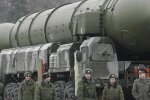
For the first time in decades, the world’s two largest nuclear powers are operating without a safety net. Today's expiration of the revised START treaty signals the end of active nuclear disarmament, effectively allowing the United States and Russia to expand their arsenals without legal constraint.
Washington and Moscow currently maintain between 1,000 and 2,000 warheads each. With the treaty’s dissolution, the caps restraining those figures have vanished. Geopolitical strategist Peter Zeihan noted there is "really no appetite" within either the current U.S. administration or the Russian Federation to negotiate a replacement.
The collapse of this framework is largely driven by insecurity within the Kremlin. While the Trump administration was never a champion of arms control, Zeihan places the primary onus on a Russian state that feels strategically outmatched. Moscow views its nuclear stockpile as the sole means to demand respect from a West it believes has repeatedly betrayed it.
The balance of power has shifted. Cold War treaties were originally born from Soviet fear of overwhelming American technological superiority; Moscow knew it could not survive a first strike. Under Vladimir Putin, however, the strategy evolved. According to Zeihan, the Russians have systematically "abrogated or cheated on every single one of the treaties" to force American withdrawal, while simultaneously fielding weapons explicitly barred by the agreements.
The ongoing conflict in Ukraine makes a return to the negotiating table nearly impossible. Any meaningful deal requires invasive inspections to verify warhead dismantlement—a level of trust that is nonexistent while one party actively engages in a major war.
"The idea that you can have American military and civilian personnel poking around into the Russian nuclear complex... it's not feasible," Zeihan observed.
While American and Russian stockpiles account for over 90 percent of the world's nuclear weapons, that dominance may soon dilute. Without a ceiling set by the superpowers, smaller nations lack the incentive to show restraint. Countries previously content to remain on the sidelines now face a strategic environment that demands they secure their own existence.
This shift applies to established powers like China and ambiguous actors like Israel, but also potentially to South Korea, Japan, and Poland. The dissolution of the bilateral monitoring system has removed the lid from the pressure cooker, and the logic of mutual assured destruction is about to become significantly more crowded.
We are now at the "dawn of a new era of massive proliferation," Zeihan warned.