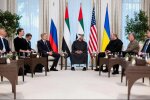
A new round of US-mediated negotiations on Ukraine began in Abu Dhabi on Wednesday, February 4.
According to a report by Politico, as cited by Hvylya, the two-day meetings were preceded by a massive Russian assault on Ukrainian infrastructure following a brief weekend lull. Overnight, 450 drones and 71 missiles, including ballistics, were launched at Kyiv, Dnipro, Kharkiv, Sumy, and Odesa. The strikes targeted the power grid and residential buildings as temperatures plummeted below -20 degrees Celsius.
Ukrainian Foreign Minister Andrii Sybiha called for an end to Vladimir Putin's "illusions" that he can achieve results through bombardment.
"Neither the anticipated diplomatic efforts in Abu Dhabi this week nor his promises to the US deterred him from continuing terror against ordinary people during the harshest winter," the Ukrainian diplomat stated.
According to US President Donald Trump, those promises included refraining from strikes on Kyiv and other major cities for a week during the "extreme cold." However, as soon as Trump made the claim, Kremlin spokesperson Dmitry Peskov warned that the pause would only last through the weekend.
The escalation marks a rocky start for the talks. Many Ukrainian politicians argue that Russia is merely feigning a diplomatic process to stay in the good graces of the unpredictable American leader—even as Trump displays unusual patience toward Putin and significantly less toward President Zelensky.
"Unfortunately, this is entirely predictable," Zelensky’s advisor Mykhailo Podolyak wrote on Tuesday. "This is what a Russian 'ceasefire' looks like: using a brief thaw to stockpile missiles, then striking at night when temperatures drop to minus 24 or lower, targeting civilians. Russia sees no reason to stop the war, end genocidal practices, or engage in diplomacy."
It is difficult to argue with his pessimism. Putin’s Kremlin has a long track record of using peace talks to stall, obfuscate, and exhaust opponents while continuing hostilities—a strategy the Russian leader and Foreign Minister Sergey Lavrov have employed repeatedly in Ukraine and for years in Syria.
A Shift in the Negotiating Room
Nevertheless, some Ukrainian and American sources familiar with the proceedings suggest these talks may be more promising than they appear. They claim both sides have become more "constructive"—though that term has often been used loosely in the past.
"Previously, these negotiations were like pulling teeth without anesthesia," said a Republican foreign policy expert who has advised Kyiv. "I used to want to scream every time I saw another report that discussions were 'constructive.' But now, I think they actually are in a sense. I notice the Russians are taking these talks more seriously."
Part of this shift is attributed to the caliber of the new Ukrainian team following the departure of the once-influential Head of the President’s Office, Andrii Yermak. The current lineup includes some of the country's most capable figures: new Chief of Staff and former GUR head Kyrylo Budanov; NSDC Secretary Rustem Umerov; and David Arakhamia, leader of the "Servant of the People" parliamentary faction.
"I’ve noticed that since David joined... there has been a marked improvement with the Russian negotiators. I think it’s because they respect them—especially David—and see them as people who live in reality and are ready for compromises," the expert explained. "I am cautiously optimistic that we have a reasonable chance of ending this conflict by spring."
A former high-ranking Ukrainian official was less sanguine but agreed there has been a change in Russia's mood and tone at the table.
Describing the head of the Russian delegation, GRU Chief Igor Kostyukov, and military intelligence officer Alexander Zorin as practical men, he noted that neither is prone to the long lectures on the "root causes" of the conflict typical of Lavrov or Putin. "Russian intelligence officers are businesslike, diving straight into practical details," the former official said.
The European Pressure Factor
He suggested the shift might stem from the Kremlin’s realization that Europe is becoming more serious about continental defense, ramping up arms production, and seeking to reduce its security dependence on the US.
"A peace deal—an end to the war—could significantly sap that momentum. It would be much harder for European leaders to sell the sacrifices needed for higher defense spending to their voters," he explained.
Of course, Russia’s change in tone could simply be another attempt to string Trump along. "Putin has almost nothing to show for the enormous costs of the war. Accepting a negotiated settlement now, where he cannot claim a clear 'victory' for Russia and the Russian people, would be a major internal problem," argued retired Australian General Mick Ryan.
Whatever the motivations, the outcome of the Abu Dhabi talks in the coming days will likely reveal whether Putin is truly ready to talk business.