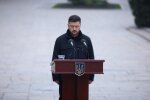
On December 11, Ukrainian President Volodymyr Zelensky met with Ukrainian and international journalists at the Presidential Office. During the briefing, he addressed the status of peace negotiations, territorial issues, the fate of the Zaporizhzhia Nuclear Power Plant (ZNPP), and other key topics.
Peace Negotiations and the 20-Point Plan
Ukraine has submitted its response to the plan, which the United States had revised and discussed with Russia. European partners were involved in working on this version. The plan has been reduced from 28 to 20 points and is not a single document but a complex of documents. Many of these are not yet finalized as they depend on the foundational 20-point plan.
Working on the economic plan will be Prime Minister Yulia Svyrydenko, Minister of Economy Sobolev, Deputy Minister Kachka, and others involved in the Mineral Deal.
Territorial Issues
Questions regarding territories remain. "The Russians want the entire Donbas, but naturally, we do not accept that," Zelensky said. The Americans are seeking a format and have discussed a "free economic zone," which the Russians refer to as a "demilitarized zone." Ukraine’s position is that it is only fair to hold the line where the troops currently stand.
The American side envisions it as follows: Ukrainian troops withdraw from the territory of the Donetsk region, while Russian forces do not enter this territory. Who would administer this zone remains unknown.
"If one side’s troops are to withdraw while the others remain where they are, what exactly will stop the Russian troops from advancing further?" the President asked.
Territorial questions will be answered by the people of Ukraine via elections or a referendum.
ZNPP and Occupied Territories
The document proposed a Russian withdrawal from parts of the Kharkiv, Sumy, and Dnipropetrovsk regions. The Kherson and Zaporizhzhia regions would remain unchanged.
Regarding the ZNPP: The Russians want to keep the station for themselves. "We said: if that happens, the plant will not operate," Zelensky stated. The Americans want a joint management format. Ukraine’s position is that if the Americans can take control of the station and demilitarize the zone, then Ukrainian access will be possible.
Ceasefire and Security Guarantees
Following negotiations with the Russian side, the U.S. believes a full ceasefire is possible only after a framework agreement is signed. The Ukrainian security team will work with the American team on guarantees to ensure "there is no third Russian invasion."
Elections Under Martial Law
Zelensky asked MPs to prepare legislative amendments regarding the possibility of holding elections during martial law. "There was a signal from the United States regarding elections—I reacted and am ready for this," he said. Security and legislation must be worked out.
Size of the Armed Forces and Funding
The document agrees on a realistic army size of 800,000 troops. Ukraine is vying for $45–50 billion for next year. Packages totaling $15–16 billion are expected through the PURL program.
Prisoner Exchanges
"The Russians have started to stall these processes because they want comprehensive agreements," the President said. Following Rustem Umerov’s meeting, the parties agreed on a major exchange before the New Year, but currently, there is a slowdown specifically from the Russian side.
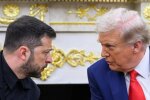
Negotiations regarding the U.S. peace plan for Ukraine have been ongoing for several weeks. On December 8, following the London summit, Zelensky reported that the plan had been reduced from 28 to 20 points—"frankly anti-Ukrainian points have been removed." At the same time, the President noted that a compromise on territories has not yet been found, and his vision for ending the war differs from Trump's approach.
On December 10, Ukraine submitted its response to the Trump administration regarding the latest draft of the American peace plan. According to the Financial Times, the Trump administration gave Zelensky only a few days to respond, and during negotiations, special envoy Steve Witkoff and Jared Kushner pressured the Ukrainian side, demanding a quick decision.
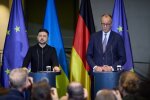
Ahead of the "Coalition of the Willing" video conference on December 11, Macron, Starmer, and Merz held a 40-minute call with Trump regarding the situation in Ukraine. The European leaders discussed "the latest news on the current U.S.-led peace talks." Against this backdrop, European diplomats and some American officials are concerned that Trump may abandon the negotiations due to slow progress.